Secure IT Disposal for Solicitors, Legal Firms and ChambersLegal organisations handle some of the most sensitive information held by any professional sector. Computers, laptops, servers and storage devices may contain privileged correspondence, client identification documents, financial records, witness information, case files and confidential legal advice.
When this equipment is replaced, relocated or no longer required, it needs to be processed through a secure and fully documented disposal route. Removing a device from active use does not remove the information stored on it, and informal disposal methods can leave firms without a clear record of how confidential data was handled.
Green IT Disposal provides secure IT disposal for solicitors, legal firms, barristers’ chambers and other professional legal organisations across the UK. We manage collection, asset recording, certified data erasure, physical destruction where required, sustainable reuse and responsible WEEE recycling.
Our approach is built around security and accountability. At the same time, we avoid destroying usable equipment unnecessarily. Where devices can be securely sanitised and safely reused, we aim to preserve their remaining value and extend their working life.
IT Disposal for Confidential Legal EnvironmentsLegal practices are trusted with information that clients may not share with anyone else. That responsibility continues when IT equipment reaches the end of its useful life.
A retired laptop may still contain downloaded case documents, cached emails and saved login credentials. Desktop computers can retain scanned identification records, financial information and draft correspondence. Servers and backup systems may hold years of archived matters, even after files have been transferred to a newer platform.
Simply deleting folders or resetting a device may not make the underlying information permanently inaccessible. Without specialist data sanitisation, information can sometimes remain recoverable.
A professional IT disposal service provides a controlled process for identifying, collecting and processing these assets. It also gives your firm documentation that can support internal policies, client assurance and wider compliance requirements.
Protecting Client Confidentiality and Legal PrivilegeConfidentiality is fundamental to the relationship between legal professionals and their clients.
Information held by a solicitor, law firm or barristers’ chambers may relate to litigation, family matters, commercial transactions, criminal proceedings, property disputes or sensitive personal circumstances. It may also include legally privileged communications that require a particularly high level of care.
Poor handling of redundant IT equipment can create a reputational risk even where no formal data breach occurs. Clients expect their information to be protected throughout its lifecycle, including after the device on which it was stored is no longer needed.
Green IT Disposal uses specialist data erasure processes to sanitise suitable storage devices. Certification can be provided to show that equipment has passed through the agreed procedure.
Where a device cannot be securely erased, or where your internal policies require physical destruction, an appropriate destruction route can be arranged. This helps your organisation apply a proportionate process based on the sensitivity of the information and the condition of the equipment.
A Clear Chain of CustodyFor legal organisations, data security starts before equipment reaches the processing facility.
Devices should be recorded, collected and transported through a controlled process. If equipment is passed through several unknown parties, it becomes more difficult to demonstrate where it has been and who has had access to it.
Green IT Disposal uses its own collection vehicles, which are satellite tracked and fitted with CCTV. This helps maintain control over equipment from the point of collection through to processing.
Asset reports can provide a clearer record of what was removed from your premises. Depending on the agreed service, identifying details can be recorded against individual devices and storage media.
This documented approach can be particularly valuable during an office move, merger, technology refresh or closure of a branch or chambers. It allows the organisation to compare the completed collection against its own asset register and identify any discrepancies promptly.
Certified Data Erasure and Physical DestructionNot every data-bearing device needs to be physically destroyed.
Where a hard drive or solid-state drive remains functional, specialist erasure may remove the information securely while preserving the device for reuse. This can offer a more sustainable and commercially sensible outcome than destroying the entire asset.
The erasure process is verified, and certification can be supplied to support your records.
Physical destruction may be more appropriate where a drive has failed, cannot complete a verified erasure or was used to hold particularly sensitive information. Some firms also have internal or client-led policies that specify destruction for certain categories of data.
Green IT Disposal can process equipment according to the agreed requirements rather than applying one standard method to every asset. This helps maintain security while avoiding unnecessary waste.
Equipment Commonly Collected from Legal FirmsLegal practices often build up a varied estate of redundant IT equipment over several years.
A collection may include desktop computers from administrative teams, laptops used by fee earners, servers, monitors, printers, networking equipment and loose hard drives. Chambers may also have shared systems alongside devices used by individual barristers, clerks and support staff.
We can collect:
- Desktop computers and office workstations
- Laptops and docking equipment
- Servers and storage arrays
- Hard disk drives and solid-state drives
- Monitors and display equipment
- Network hardware and communications equipment
- Backup devices and external storage
- Other redundant electrical and IT assets
Equipment does not all need to be the same age or condition. A single collection may contain newer reusable devices, damaged hardware and older equipment that requires responsible recycling.
IT Disposal During Office Moves and RefurbishmentsLegal office moves can involve a considerable amount of planning.
Files, active systems and working equipment must be transferred securely, while older devices may need to be separated and removed. If disposal is left until the final stage, redundant computers and storage devices can be overlooked or moved unnecessarily to the new premises.
Planning the process earlier gives your IT team time to confirm that data has been migrated and devices are no longer linked to active users or management systems. Equipment that will remain in service can then be clearly separated from assets ready for collection.
Green IT Disposal can arrange collections around your relocation or refurbishment programme. Larger clearances may be completed in phases to reduce disruption and reflect the schedule of the wider project.
This can also help free up office, archive and server-room space before the move is completed.
Supporting Mergers, Acquisitions and Practice ClosuresMergers and acquisitions often leave legal organisations with duplicate systems and overlapping equipment.
Two firms may use different servers, laptops, storage devices and software environments. Once systems are consolidated, the outgoing hardware still needs to be audited and processed securely.
Similar challenges can arise when a branch closes, a practice restructures or a barristers’ chambers changes premises. Equipment may belong to different departments or users, and asset records may not always reflect what remains on site.
A managed disposal service helps bring these devices into one controlled process. Assets can be collected, recorded and handled according to the agreed data destruction requirements.
Where equipment remains suitable for reuse, its residual value may also help support the cost of collection and processing.
Reuse of Professional IT EquipmentLegal firms often replace equipment on a planned cycle to maintain reliability, security and support.
A laptop or desktop computer may therefore be retired while it remains in good working condition. After secure data erasure and technical assessment, suitable equipment may still have a productive second life.
Green IT Disposal prioritises refurbishment and reuse where this can be completed without compromising information security. Devices may be cleaned, tested, repaired or upgraded before being redeployed or remarketed.
This preserves more of the resources already invested in manufacturing the equipment and can reduce the amount of electronic waste produced by the organisation.
Where a complete device is unsuitable for reuse, viable components may still be recovered. Remaining materials are then processed through responsible recycling routes.
Supporting Data Protection and WEEE ComplianceLegal firms must manage both the confidential information stored on their equipment and the environmental responsibilities associated with disposing of electrical assets.
UK data protection requirements expect organisations to take appropriate measures to prevent unauthorised access to personal information. This responsibility continues when a device is retired.
Computers, servers and other electrical equipment must also be transferred through an appropriate waste route. Businesses have a duty of care and should be able to demonstrate that redundant assets have been passed to a suitable provider.
Green IT Disposal can provide collection records, asset reporting and certification for completed erasure or destruction services. This documentation may support internal audits, insurer requirements, client questionnaires and environmental reporting.
It also gives partners, compliance teams and practice managers greater visibility over how equipment has been processed.
IT Disposal for Barristers’ ChambersBarristers’ chambers can have different working arrangements from a traditional law firm.
Members may use a mixture of personally assigned devices, shared systems and equipment managed centrally by the clerks or chambers administration team. Sensitive data may be held across laptops, desktop computers, servers and portable storage devices.
When members leave, systems are upgraded or premises are reorganised, it is important to identify which equipment belongs to the chambers and what information it may contain.
Green IT Disposal can support chambers with planned collections and secure data processing. We can work with the relevant administrator, clerk or IT provider to understand the equipment available and agree the appropriate reporting requirements.
This creates a more structured alternative to storing old devices indefinitely or using a general office clearance service that may not provide adequate data security controls.
Secure Collections from Legal PremisesSolicitors, law firms and chambers often operate from city-centre offices, listed buildings or multi-storey premises where access may need to be carefully planned.
Equipment may be held in individual offices, secure storage rooms, basements or server areas. Parking, loading restrictions, lift access and building security procedures can all affect the collection.
We discuss these practical details in advance so the removal can be completed efficiently and with minimal disruption to staff and clients.
Green IT Disposal operates nationally, with particular coverage across Greater London, the North West, the Midlands and towns along the M1 corridor. This allows us to support independent practices, regional firms and organisations with equipment spread across several offices.
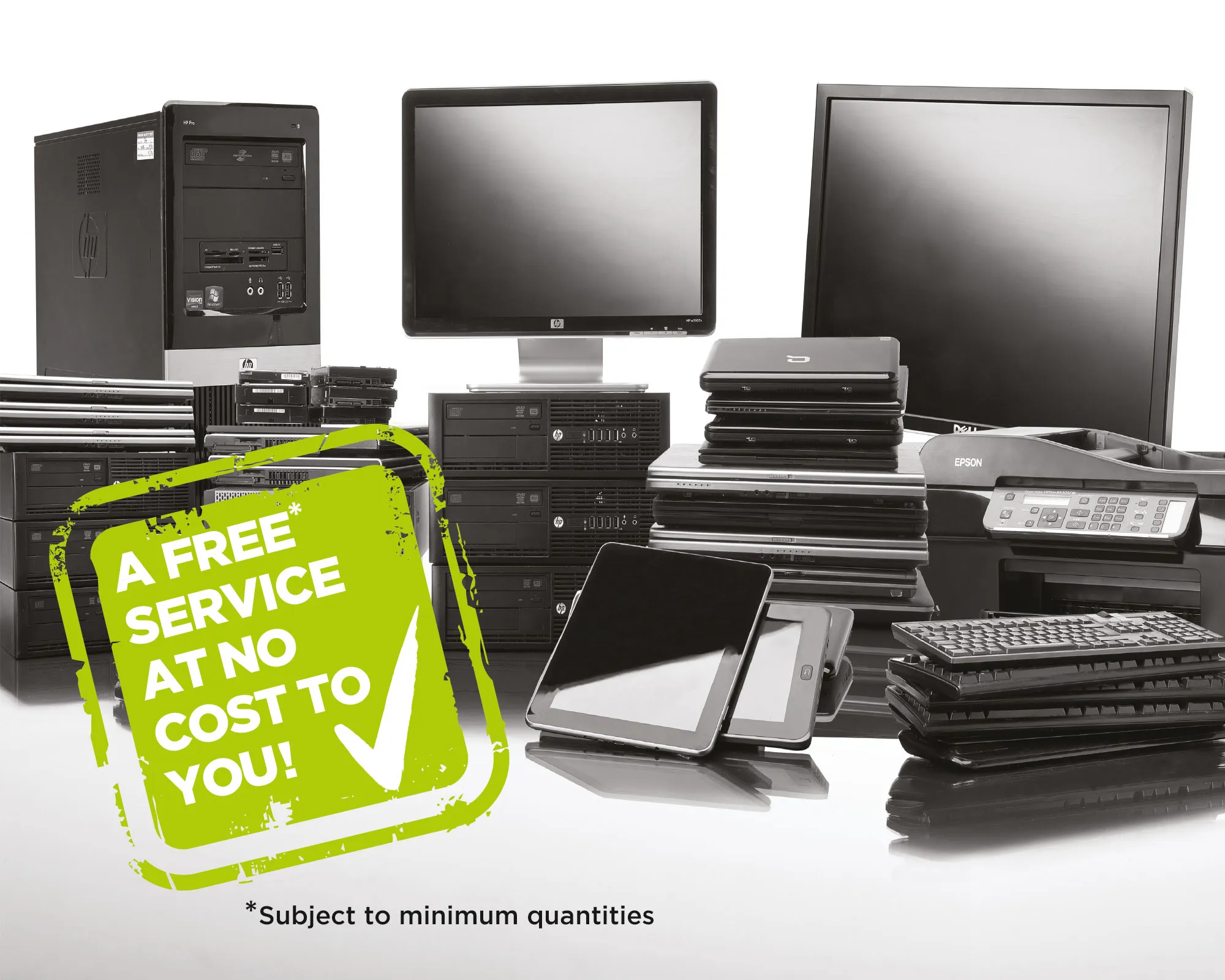
Can IT Disposal Be Free for Legal Firms?Free IT disposal may be available for qualifying collections, subject to the type, quantity, age, condition and location of the equipment.
Laptops, desktop computers, servers and other reusable assets may retain residual value. Where equipment can be securely refurbished or remarketed, this value may help offset the cost of collection, data erasure, reporting and processing.
A small number of loose hard drives requiring physical destruction may be assessed differently from a larger collection containing working IT equipment.
Providing an approximate inventory, photographs and details of any specific security or reporting requirements will help us review the project accurately.
Arrange IT Disposal for Your Legal OrganisationWhether your firm is replacing laptops, consolidating offices or clearing equipment after years of upgrades, Green IT Disposal can provide a secure and accountable disposal service.
We combine controlled collection and detailed reporting with certified data erasure, physical destruction where required, sustainable reuse and WEEE-compliant recycling. This helps protect client confidentiality while giving your organisation a clear record of how redundant technology has been handled.
Call us on
0161 928 1144 for free advice and a quote, or
contact Green IT Disposal to discuss your law firm, solicitors’ practice or chambers’ IT disposal requirements and arrange a secure collection.